


THEATER TIMES REVIEWS JULY 2007
FEEDBACK  HOME
Can-Can
Pasadena Playhouse


La Jolla Playhouse


Old Globe Theatre


Open Fist Theatre


Athena Theatre/Stella Adler
FEEDBACK  HOME
Top
Can-Can
music and lyrics by Cole Porter, book by Abe Burrows, revised by Joel Fields and David Lee,
choreography by Patti Colombo, arrangements, orchestrations, musical direction by Steve
Orich, directed by Mr. Lee

Pasadena Playhouse • June 29-August 5  (opened July 6, rev. 7/6) extended through 8/8

WITH Michelle Duffy, Kevin Earley, David Engel, Amir Talai, Yvette Tucker, Jeffrey Landman, Justin
Robertson, Robert Yacko, and Shell Bauman, Andrea Beasom, Bonnie Bentley, Robert Alan Clink, Seth
Hampton, Alaine Kashian, Jeanine Meyers, Alison Mixon, Justin Roller, Joe Schenck, Jonathan Sharp, Leslie
Stevens, Rocklin Thompson, Rebecca Whitehurst  
PRODUCTION  Roy Christopher, sets; Randy Gardell,
costumes; Michael Gilliam, lights; Francois Bergeron, sound; Tim Weske, fights; Jill Gold/Lea Chazin, stage
management

Funding support–Sheila Grether-Marion and Mark Marion, NEA’s “American Masterpieces: Three Centuries
of Artistic Genius”

What was unacceptable behavior in the 1890s and acceptable dramaturgy in the 1950s
may be tame and creaky now, but an updated book and superior lead performances
have given David Lee’s lively Pasadena Playhouse staging of Cole Porter’s Can-Can
(through August 5) enough engaging immediacy to high-kick it into 21st Century
respectability.  Lee and co-reviser Joel Fields may not have goosed Abe Burrows'
script up to the level of the rest of the production, but that doesn't stop this Can-Can
from providing a thoroughly entertaining evening, thanks to a break-out lead
performance, a cast album-worthy cast, and a kind of frolicsome fourth-wall
penetration rooted equally in improv and burlesque.  It’s such an integrated affair that
rather than being relied upon, the show’s musical tent poles – standards like ‘I Love
Paris,’ ‘It’s All Right with Me’ and ‘C’est Magnifique’ – flow in as bonuses.

The laurels must first be laid before Mr. Lee, who has opted out of the dance halls of Mendes’ Cabaret or
Luhrmann’s Moulin Rouge and settled into a clean, well-lighted environment where fairly wholesome girls
only occasionally offer a glimpse of more than stocking.  From Roy Christopher’s colored-pencil postcard
set, which pops period character cutouts into the boxes and pit and offers scene titles projected onto a
cartoon drop, to Randy Gardell’s beautiful costumes, Michael Gilliam’s rich lighting and Francois Bergeron’s
crisp sound design, Mr. Lee brings the atmosphere of Offenbach’s underworld above ground.

From conductor Steve Orich’s opening caller-beware warning, to the intermission word-gathering for a
show-specific alteration to the finale, there are lots of opportunities for the audience to be drawn into the
show. Michelle Duffy emerges as the show’s star, thanks to joint ownership by her and her character of,
respectively, the show and the showplace within it. She immediately sets the evening's tone with a teasing
welcome flush with personality and showbiz chops.  It’s a front-rank star-turn, matched by the thrilling
vocals of Kevin Earley as her love interest and great support from a suave David Engel and an innocent
Yvette Tucker.

The story, a device so pat that only a production this sparkling could stifle our groaning, involves Pistache
(Duffy), a single woman who owns the Bal du Paradis nightclub. While it seems a pretty healthy
establishment, it actually is in danger of being shut down by the local magistrate because of its reliance on
the Can-Can.  This dance is characterized by acrobatic individual work – all beautifully executed here under
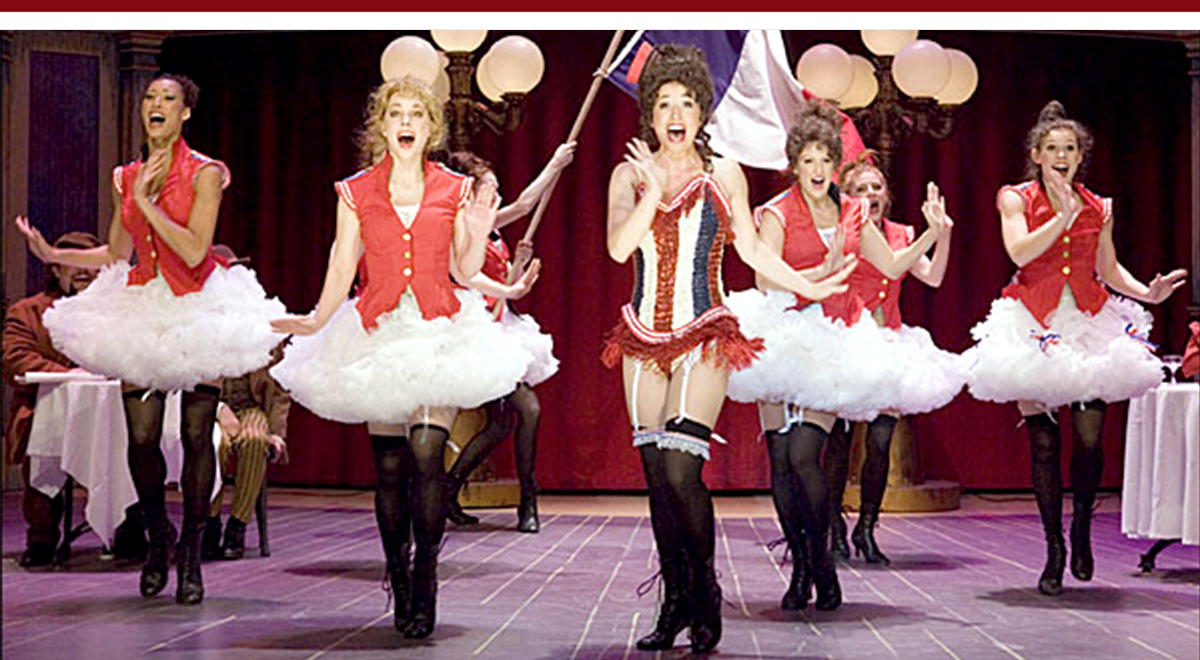
Patti Colombo’s choreography – and the famous finale.  The dancers form a line, hike their skirts, and high-
kick their frilly petticoats and panties into a blur that resembles a row of whirling white Chrysanthemums,
their black-stockinged legs waving like bee-hungry stamina.

Hilàre (Engel) is a powerful, pan-discipline-ravaging critic who (despite, or perhaps because of, some late-
disclosed problems engorging) uses his influence to gain interest in the Bal du Paradis -- and to leverage
interest from its owner and newest dancer, Claudine (Tucker). Meanwhile, the most vocal judge advocating
the closure of the club is Aristide (Earley), who just happens to be the only man Pistache really loved, yet
whom she never knew was nearby. When they reunite, Pistache invites him back to her office and hints
she may still carry a torch.  Aristide quickly extinguishes it, but later confesses second thoughts on turning
her down.  She promptly admits her own change of heart  The tables will turn again, and again, never for
any believable reason, until both allow that they match, and can light up simultaneously,

A side story about Claudine’s boyfriend, a Bulgarian sculptor named Boris (Amir Talai) and his bohemian
friends leads to the only tiresome parts of the show.  Talai, whose stage experience runs from the
Groundlings to the Vegas Queen tribute, sings well but doesn't have the deftness for a very tricky role.

Can Can ran for nearly 900 performances in its 1953 premiere and was updated by Burrows himself for
the 1981 revival.  The tolerance of the times had changed and the remounting ran only five performances.  
While Fields and Lee have given some back story to the teeter-totter romance between Pistache and
Aristide, it remains unbelievable.  Some of the fault may rest with Duffy and Earley, who despite the
enormous gifts they bring, need to wriggle some more subtext into their scenes together.  Right now their
back and forth has all the intrigue of a game of Capture the Flag.

While Duffy and Earley fail to make the romance plot work through dialogue and scene work, their curtain-
heralding smacker could vie for MTV's Best Stage Kiss (if MTV were aware the theater existed).

And, someone deserves some extra credit for making the production’s mics disappear.  Having just seen a
musical in which virtually all cast members seemed to have an Indian pendant hanging in the middle of their
foreheads, this is an achievement.  Whether it’s Lee, Gardell, Bergeron or some nameless tech, they should
tape this for an instructional video on what musicals can look like.

The play justifies itself by promising to reveal the derivation of the French phrase for 'my little cabbage.'  
When the explanation arrives, it has only the slightest connection with anything. But, like so many other plot
points, it is quickly forgiven in the whir of a show that translates to a lot of fun for audiences, and will
surely mean a lot of cabbage for the Playhouse.
Michelle Duffy
Jeanine Meyers
PHOTO CRAIG SCHWARTZ
The Idiot Box
HOT HOUSE
Top of page
Pterodactyls
by Nicky Silver, directed by Patrick Varon

Athena Theatre / The Stella Adler Theatre July 12-29 (Ext. to 8/25; Opened, reviewed 7/12)

WITH Ryan Baylor, Christopher Bradley, Gillian Doyle, Todd Kubrak, Veronique Ory  PRODUCTION Stefan
Depner, set; Marina Toybina, costumes; Johnny Ryman, lights; John Bobek, music; Kevin Jordan/Kaori Mita,
stage management

As the 1990s were reaching the midway point and the AIDS crisis was well into its
second decade, Nicky Silver emerged with a string of plays – ‘The Food Chain,’
‘Raised in Captivity,’ ‘Fat Men in Skirts’ and ‘Pterodactyls.’  Writing in a fiercely comic
voice, Silver confronted the Black Death on its own absurdist playing field with Black
Comedies so caustic they promised to long outlive the epidemic.  ‘Pterodactyls,’ the
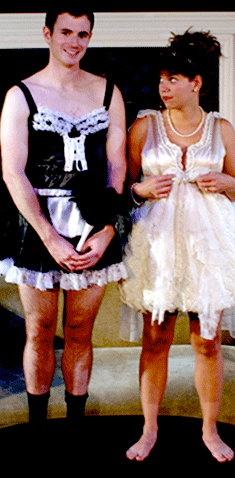
1993 breakthrough, won the Oppenheimer Award, Kesselring Award and Best Play
nominations from the Drama Desk and Outer Critics’ Circle.  That it endures is
evidenced by two separate L.A. mountings in recent months. The second, an Athena
Theatre production directed by Patrick Varon, continues through July 29 at the Stella
Adler Theatre in Hollywood.  

Though Varon’s staging falls short of showing the play’s full power, the Athena production offers a decent
opportunity to again hear this still vibrant and exciting play.

‘Pterodactyls’ retains its value not because AIDS remains urgent but because Silver integrated it into the
larger contest of his story.  AIDS here is a symptom of family and societal dysfunction.  The Duncan family
in ‘Pterodactyls,’ living in abject denial, is representative of the larger culture.  For failure to confront the
reality of its own behavior,
this family – and perhaps, by extension, the family unit itself – will face
extinction. (Here the methods are alcoholism, depression, suicide, job loss
and AIDS.) Nuclear families like
the denying Duncans are doomed dinosaurs, Silver implies.  In his subsequent 1995 comedy, ‘Raised in
Captivity,’ however, he offered hope for family survival in a new structure that adapts to change.

Silver’s black comedy is extreme in both regards: very funny and very dark.  Getting both sides to play to
maximum effect is challenging and takes an almost intuitive blend of the arch and the sublime.

Todd Duncan (Todd Kubrak), a man in his early 20s, is returning home after some years on his own.  He is
not the prodigal son, arriving with new appreciation for his family, but a mortally wounded victim of life,
wandering in off the smoking battlefield of human indifference.  HIV-positive, he has arrived to die among
family.  He quickly discovers, however, that the still-toxic environment in which he was raised has the
effect of commuting his death sentence to life.  Rather than wasting away, he becomes emboldened to act
as conductor of the other characters' inevitable - if accelerated - demise.

His return coincides with the sudden marriage of his younger sister Emma (Veronique Ory), who has
railroaded her compliant first boyfriend Tommy McKorckle (Ryan Baylor) into hasty union.  Mother Grace
(Gillian Doyle) and father (Christopher Bradley) continue their non-relationship much as it must have been
when the children were young: They still treat their grown children as little kids and Dad continues to
superimpose his own passions onto them.  As the crazy carnival atmosphere of preparing for the wedding
proceeds, Todd focuses on assembling a whopping metaphor buried in the backyard – the skeletal remains
of a Tyrannosaurus Rex.  

Todd Duncan is our guide into this darkly comic world and Kubrak and Varon get off on the wrong foot
during the brief overview of human history that begins the play.  In a five-minute explanation that traces
evolution from creation to contemporary New Jersey, Silver wants to establish that balanced tone.  But
actor and director go for laughs more overtly, with Kubrak showing concern about his audience’s reaction.
He seems interested in entertaining us and apologizes for forgetting his notes.  These qualities do not mesh
with this shell-shocked young man, so beyond the opinion of others.  The writing has enough absurd humor
to land without the extra effort.

The rest of the characters, however, are meant to be ridiculous and needy.  Where Todd is incapable of
connecting because he’s embraced too much, the others just don't have it in them to relate.  Not until Todd
ushers them over the threshold, and exacts its price.  The first scene after Todd’s introduction, in fact, is
the best rendered of the comic scenes.  In a giddy exchange, Ory and Baylor mindlessly prattle on like  
speakers for remote record players no one controls.  Their ideas, feelings and desires are all outsourced
safely beyond their consciousness or responsibility.  We feel their phonograph needles lightly skating over
the surface of every subject.  It has the right pace and delivery.  

Baylor, who has the most success in maintaining this quality, holds the effect until his seduction by Todd
leads to his premature exit.  Ory, on the other hand, wants her Emma to seek understanding. We see her
character groping for meaning in what others say.  This runs counter to the writing, in which she prefers to
block things out. She doesn’t remember having a brother, and will pretend to be deaf when she doesn’t
want to know something.  Her time for understanding comes, and she gets a long time to savor it.

Gillian Doyle is also on the right track with the pivotal role of mother Grace.  While she’s prone to work
harder than she needs to, it is overall a successful turn.  Christopher Bradley as the father, however, is
almost always working too hard.  A face etched with consternation, this father seems much too angry and
concerned when he is more likely to be simply remote and detached, roused only by inappropriate
attractions.

As the play darkens, the work eases and the performances find their tone. Kubrak eventually settles in,
and by the closing scenes, when the temptation to entertain is gone, he and Doyle do their best work.

The design work is simple and solid.  Merits to costumer Marina Toybina and Varon for keeping the apparel
limited to a minimum, further 'typing' these characters and keeping them unreal.  The set, with its absence of
photographs, illustrations or books, belies the message of a family without a sense of history or
perspective.  Good work there by Stefan Depner, set, and Johnny Ryman, lights. John Bobek's sound
design features swing era music, hearkening back to a time when, we believe, the family was a different
animal.
Gillian Doyle
Christopher Bradley
Veronique Ory
Todd Kubrack
Ryan Baylor
(clockwise from top left)
FACING EXTINCTION
Top of page
Pterodactyls
The Idiot Box
by Michael Elyanow, directed by Jeremy B. Cohen

Open Fist Theatre  July 5-August 25, 2007

WITH  Tisha Terrasini Banker, David Castellani, Corena Chase, Joe Holt, Anna Khaja, Conor Lane, Dominic
Spillane, Rod Sweitzer, Kelly Van Kirk, Amanda Weier  
PRODUCTION  Donna Marquet, set; Alex Jaeger,
costumes; J. Kent Inasy, lights; Lindsay Jones, music/sound; Henry Lide, stage management
Produced by Amanda Weier & Martha Demson

Michael Elyanow’s 2003 cautionary comedy ‘The Idiot Box,’ a network of ideas,
characters and assertions under Jeremy B. Cohen’s helpful direction, is filling the
Open Fist Theater’s playing area through July 29 like batter filling a baking pan.  It’s a
rich and entertaining evening that leaves audiences with plenty to think about, even if
the sense of dramaturgical and directorial sprawl makes for shotgun blasts rather than
pointed attacks on Elyanow’s target range of sacred cows: from the TV mindset to the
American way of life including sexism, racism, and how we treat our pets.

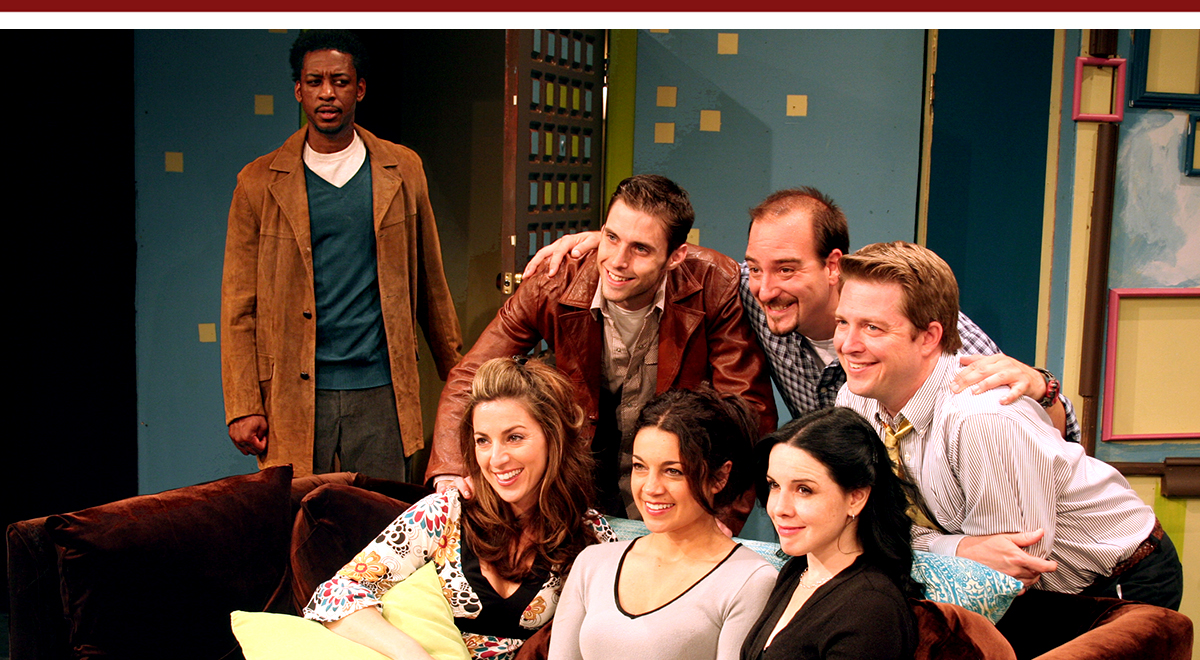
From lights up, the loud set dressings and louder laugh track tell us we’re not in theater anymore, Dorothy.  
Our house has dropped into the artificial world of the television sitcom.  We know one or more of the “six
friends sharing eight rooms” will seek to slip out from under the harsh lights and laughter, breaking the idiot
box's sixth wall to rifle through reality's mixed bag the way Jeff Daniels did in ‘Purple Rose of Cairo.'  

Elyanow clearly seeks social relevance in addition to the fun, and the actors abet him valiantly.  He’s just
crammed too many characters, plots and points-of-view in here. While he has fun aping the style and
subject matter, and goes to great lengths to answer all the story's loose ends (even resolving the tangled
plots of the show within the play that gets things started), there's a feeling that exploring the real issues of
television saturation rather than moving on to other important social problems would have been enough of a
challenge.

The crack in the Cathode occurs when Anna Khaja’s Chloe begins losing her fondness for her world after
attending a play.  Wanting the kind of reality theater provides better than TV (silent assertion #1), she drags
a roommate to see ‘Three Sisters.’  While he slumbers she is surveilled by Omar (Joe Holt, in a strong Fist
debut).  Omar, another theater fan but apparently not of the TV sphere, follows her home and, despite the
creepiness of the act, manages to take his stalk right up to her idiot box and allow the two worlds to come
together.  

Is Omar of the TV world?  Did Chloe leave her dimension when attending theater and bring him back in
through her innocence and appeal?  Probably.  But the conversion apparatus is sloughed through here.  
Suddenly all the characters are freed, first evidenced by the absence of canned laughter. The play now
ceases to be about TV and becomes about people dealing and not dealing with reality.  Of course, these
people never were real -- at least according to the set up -- and so the assertions that follow begin to fall
between the cracks.

Holt’s Omar is not only an outsider to the television dimension, he is black and the TV habitués who make up
the rest of the cast are white.  (That includes Corena Chase's Veronica, an animal expert who seems to
straddle the two worlds in a bizarre plot to help one character regain some sexual equilibrium.)  

There's no reason to bring up race, until Mark (Kelly Van Kirk), who not only holds the lease on the
penthouse but holds most tightly to the TV world, lets his antipathy for Omar's impact on his fantasy island
becomes a personal attack based on racial stereotypes.  How did this two dimensional, cardboard TV
character suddenly have racist genes?  This may seem over-intellectualizing of a play laid out as a fun-
poking take on situation comedies.  But, Elyanow wants to show that the world is about much more than TV
allows (though I encourage anyone who thinks it's nothing but wasteland to start watching shows like
'Frontline' and 'Bill Moyers' Journal), and by upping the ante with his subject matter opens a can of
dramaturgical wormwood.  

A mixture of veteran Open Fist company and actors making their first appearance form the large cast of
characters, modeled roughly on a ‘Friends’ structure of three men and three women in their 20s along with
two outsiders.  In addition to Khaja, Holt and Chase and Van Kirk, are Tisha Terrasini Banker, David
Castellani, Conor Lane, Dominic Spillane, Rod Sweitzer and Amanda Weier.

In terms of filling the playing area, Donna Marquet's fun set goes wall to wall and upstage to the seats.  All
fine.  Except the Open Space seats are elevated and require a front rail.  When the actors are pressed up
against it (as they also were in 'Macbeth'), there's a sightline problem that doesn't seem right.

Ultimately, though trimming of a couple characters and storylines (the Stephanie, Connor, Veronica plot
probably is ripest for pruning) would help this be stronger, as it is it's never tiresome.  It's quite a bit of fun
and you may find yourself laughing inappropriately at Elyanow's mock TV dialogue.  (It's okay.)  Of course,
it's all preaching to the choir, we nightly score of theatergoers, self-righteous in the lonely beliefs that ours
is the true religion, and that opiating airwave from Burbank and Television City Temples is just leading the
millions further into a desert of cultural emptiness.
Joe Holt
A MEDIUM MESSAGE
Top of page
The Deception
adapted by Steven Epp and Dominique Serrand from ‘La Fausse Suivante’ by Marivaux,
directed by Dominique Serrand  
World Premiere

La Jolla Playhouse / Sheila and Hughes Potiker Theatre / July 17-August 19, 2007

WITH  Dorian Christian Baucum, J.C. Cutler, Michelle Diaz, Liz Elkins, Casey Greig, Emily Gunyou Halaas,
Larry Herron, Merritt Janson, Nathan Keepers, Brandon D. Taylor
 PRODUCTION David Coggins, set;
Sonya Berlovitz, costumes; Marcus Dilliard, lights; Zachary Humes, sound; Mark Adam Rampmeyer,
hair/wigs; Benjamin McGovern/Jenifer Morrow, stage management

What begins with the surge and unity of purpose of an uplifting SST, levels off quickly
for a more modest if colorful vantage of deceitfulness in the La Jolla Playhouse’s
world premiere (through August 19) of ‘The Deception,’ a new adaptation of Marivaux’s
‘La Fause Suivante.’  Based on one of the 18th Century French dramatist’s lesser-
known works, ‘Deception’ has no shortage of modern relevance – with potential for
referencing everything from minor self-deception to cover-ups on a global scale.  Here
we keep it personal: sexual confusion and duplicitous relationships designed for profit
or self-protection.

A woman (Merritt Janson), whose name we never learn, was affianced to Lelio (Casey Greig), a
charismatic dowry-hound.  To determine firsthand his worthiness for the healthy annual stipend her
treasury would provide, she poses as a Chevalier to befriend him man to man.  She seeks the help of a
servant, Trivelin (J.C. Cutler), who is so refreshingly open about his reliance on guile that he quickly sees
the woman within the man’s clothing, and rises to the call in hopes of their removal.  Chevalier learns that
Leilo is previously engaged to a Countess (Emily Gunyou Harris), whose estate would pay only half the
allowance hers promises.  Leilo woefully confides to his new best friend that a prenup means he stands to
lose the handsome signing bonus he received from the Countess, plus pay a devastating penalty if he
reneges on his vows to bachelorette number one.  The Chevalier offers to win the Countess’ heart away
from Leilo so that
she will break the contract and free him to reap elsewhere.

Line for line, the new adaptation by director Dominique Serrand and Steven Epp is lively and rich.  It is
played out against a beautiful glass house set (with its inherent warning about people who throw shit),
with floor to ceiling panes, each “soaped” in a pastoral palette of spring blues, greens and yellows.  There
is no further set dressing or props.  The weight to keep things interesting and informing falls upon the
actors and the text and over the course of the evening the grinding out of all the subterfuge gets a little
wearying.  

J.C. Cutler kicks things off as Trivelin with a presence that promises a production of among the year's
finest.  There’s the kind of command and attraction one associates with expects along the Thames.  Joined
by Janson, believably boyish early on but sensuously womanly after shedding her menswear, the
excitement is maintained.  Sonya Berlovitz’ costumes – all creams, whites, blacks and grays to set the
players off against the field – adds to the anticipation.  The angled hem of Janson's frock suggests her
double-sidedness.

As the Countess, the one person whose heart is steadfastly in the right place, Halaas is asked to perform
with some bipolar comedic business, which she is up to but which removes our link with the romantic and,
like pulling the tablecloth out from under the silver service, leaves us staring at harder surfaces.  Janson
ably picks up the role as emotional touchstone, despite being saddled with active deception of the innocent
Countess.  

For contemporary audiences, all the attraction between men and women – whether extending past the
drawers or just based on appearances – becomes the most interesting part of the escapade.  True feelings
between people, with the sexual component made mysterious, is a dimension that Serrand and his actors
delicately tease out of the script.  Though Greig is not interesting enough to keep the story as engaging as
Cutler’s too-short appearances portend, and the clowning of Nathan Keepers’ Arlequino, while perhaps
true to the spirit of Marivaux, fails to take flight, this is a beautiful production that raises timeless questions.  
Tourettic bursts of profanity from male characters, which may unnerve some, are welcome blasts against
classic theater predictability and an enlivening part of the show.  

There is a great sense of company here, manifest in the
a cappella benedictory that brings the production
in for a smooth landing at curtain call.
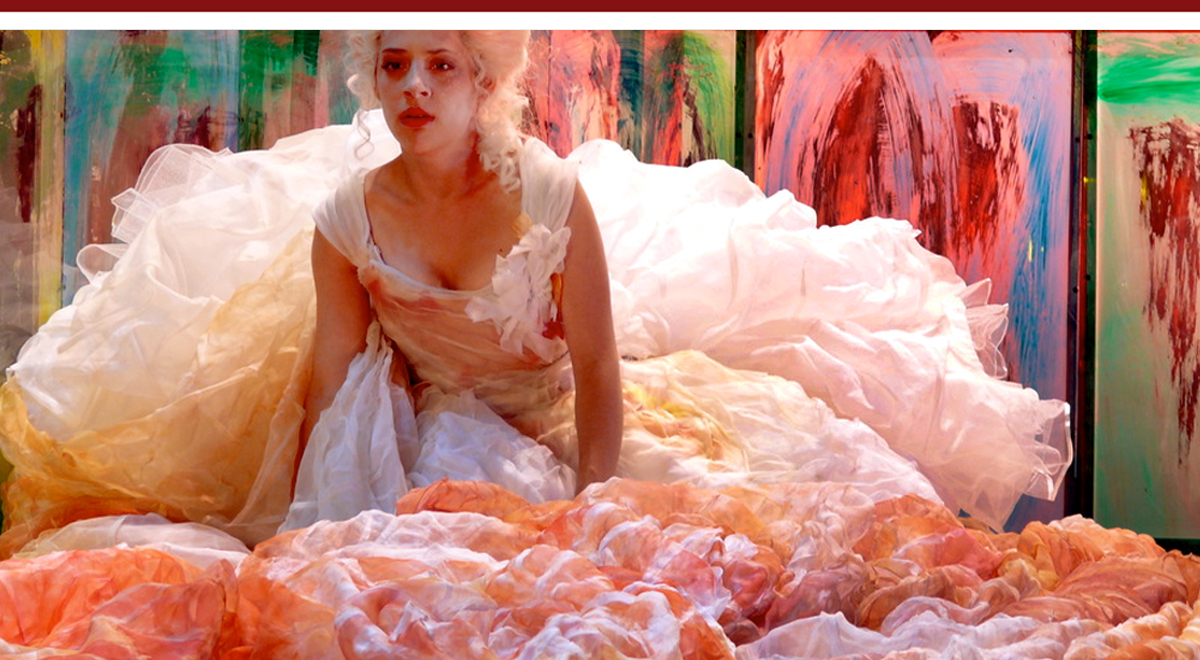
Emily Gunyou Halaas
PHOTO JT MACMILLON
The Deception
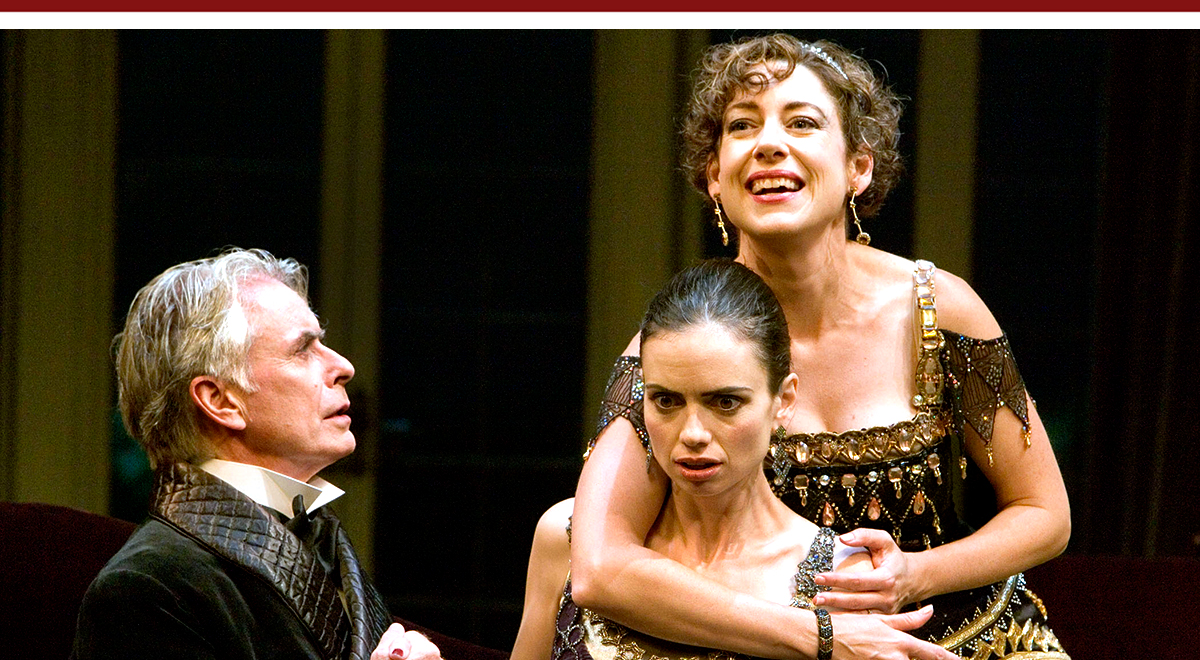
Judith Lightfoot Clarke
Santino Fontana
PHOTO CRAIG SCHWARTZ
SYMPTOMATIC
Top of page
Hay Fever
Hay Fever
by Noel Coward, directed by Robert Longbottom

The Old Globe, July 14-August 19, 2007 (Opened 7/20, rev. 7/22m)

WITH  Alan Campbell, Judith Lightfoot Clarke, Santino Fontana, Mikel Sarah Lambert, Bridget Moloney, Brian
M. Slaten, Sarah Grace Wilson, John Windsor-Cunningham, Yvonne Woods
PRODUCTION Andrew
Jackness, set; Gregg Barnes, costumes; Christopher Akerlind, lights; Paul Peterson, sound; Jan Gist,
dialect; Tracy Skoczelas/Annette Yé, stage management

Writers from William Shakespeare to Joni Mitchell have told how even a spring
weekend in the country can re-awaken the tamped soul of a city dweller.  Once clear
of town and its rules, intoxicated on air bearing only the perfume and chatter of
natural selection, the visitors discover their own true nature.  The couples uncouple,
then re-pair with new lovers, bed-hopping like bees among flowers.

In ‘Hay Fever’ (1925), however, Noel Coward’s beloved variation on the theme, the writer was less
interested in awakening the souls of townspeople than in having them serve as the captive audience of a
family that is the embodiment of non-restraint.  The central Bliss family includes mother Judith Bliss (Judith
Lightfoot Clarke), an actress, and father David (John Windsor-Cunningham), a writer. Their children,
childlike though just reaching adulthood, are Sorel (Sarah Grace Wilson) and Simon (Santino Fontana).  The
atmosphere of their country estate is alive with spontaneity and invention.  They are, in fact, incapable of
following convention, and have made the home a virtual performing space for their uneven renderings of
dramatics, literature and music.  

Communicating life’s details is of no interest to them, which explains how each family member manages to
invite their own guest for a weekend.  They arrive as the play begins: Judith’s athletic young admirer,
Sandy Tyrell (Brian M. Slaten); a diverting young woman, Jackie Coryton (Bridget Moloney), David hopes
will dislodge his writing block; Sorel’s smitten businessman, Richard Greatham (Alan Campbell); and the
beautiful woman, Myra Arundel (Yvonne Woods), with whom Simon believes he has fallen in love,  With
the final addition of a gruff domestic, Clara (Mikel Sarah Lambert), we have the perfect foundation for a
wonderful comedy.

The event that inspired Coward to write ‘Hay Fever’ was a weekend at the country home of actress
Laurette Taylor.  He wrote the comedy upon his return to the city, taking only as many days as he’d been
away.  It, along with his ‘Private Lives’ and ‘Blithe Spirit,’ remain among the most frequently produced plays
on regional theater schedules.  Part of its appeal is a confidence that the play is so well written that the
company merely needs to enunciate the lines to unleash the laughs.  However, there’s a difference
between a serviceable staging, like Robert Longbottom’s current version at the Old Globe Theatre’s main
stage, and a great one that transports the audience into that dizzy fantasyland the Blisses inhabit.

Whether or not it was his intention – and it probably wasn’t, since he has said this play has no plot and is
purely for fun – Coward’s two quartets divide along an us-them line of artists and audience.  The four
impulsive family members and their four cautious guests are thrown together by chance and don’t know
what to make of each other.  Yet, Director Longbottom and his cast don’t convince us that these groups
are so very different.  They behave differently. But are they?  It’s a fine line, but it is the key to creating a
world of Blisses in which they emote as if everything is at stake, while somehow letting us know that the
drama is for effect and nothing is really that important.  Creating that duality is a more British sensibility.  
Americans generally can come down as either silly or serious but rarely both simultaneously.  Windsor-
Cunningham as David is closest to the mark. Clarke adds to Judith’s troubles with an obsession for diva
posturing that further weights the performance.

In the first scene, an interchange between Sorel and Simon feels tedious where it should be frivolous.  
Without the right balance, Sorel seems merely petulant and spoiled instead of dotty and playful. To Wilson’s
credit, however, when she delivers some of the family’s only clear-headedness, she is spot-on: “We none
of us ever mean anything,” she confides.  And later, in a brief glimpse that she’s maturing: “A month ago, I
would let you go on with that but now I’m trying to improve myself.”

Longbottom and crew are most successful in the moments when the gap between artistic types and
audience types are overt, like when the family acts out scenes from mother’s triumphs.  It’s also when the
Globe audience showed the most life, like baseball fans sensing a rally. Finding the chemistry between the
two camps, and that special British knack for simultaneously embodying the serious and the silly, would
have given the whole play more lift.

As the title indicates, the same spring air that sows romance in some produces an allergic reaction in
others.  This ‘Hay Fever’ is catchy, but unlikely to inspire wedding bells or runny noses.